 Rewear
A Fresh Autumn Wardrobe, Using What You Own
By Sara Tilla
Dark jeans can become trapped in a narrow role: the safe pair for days when there is no time to think.
 WORDS BYToni MelaOctober 21, 2026
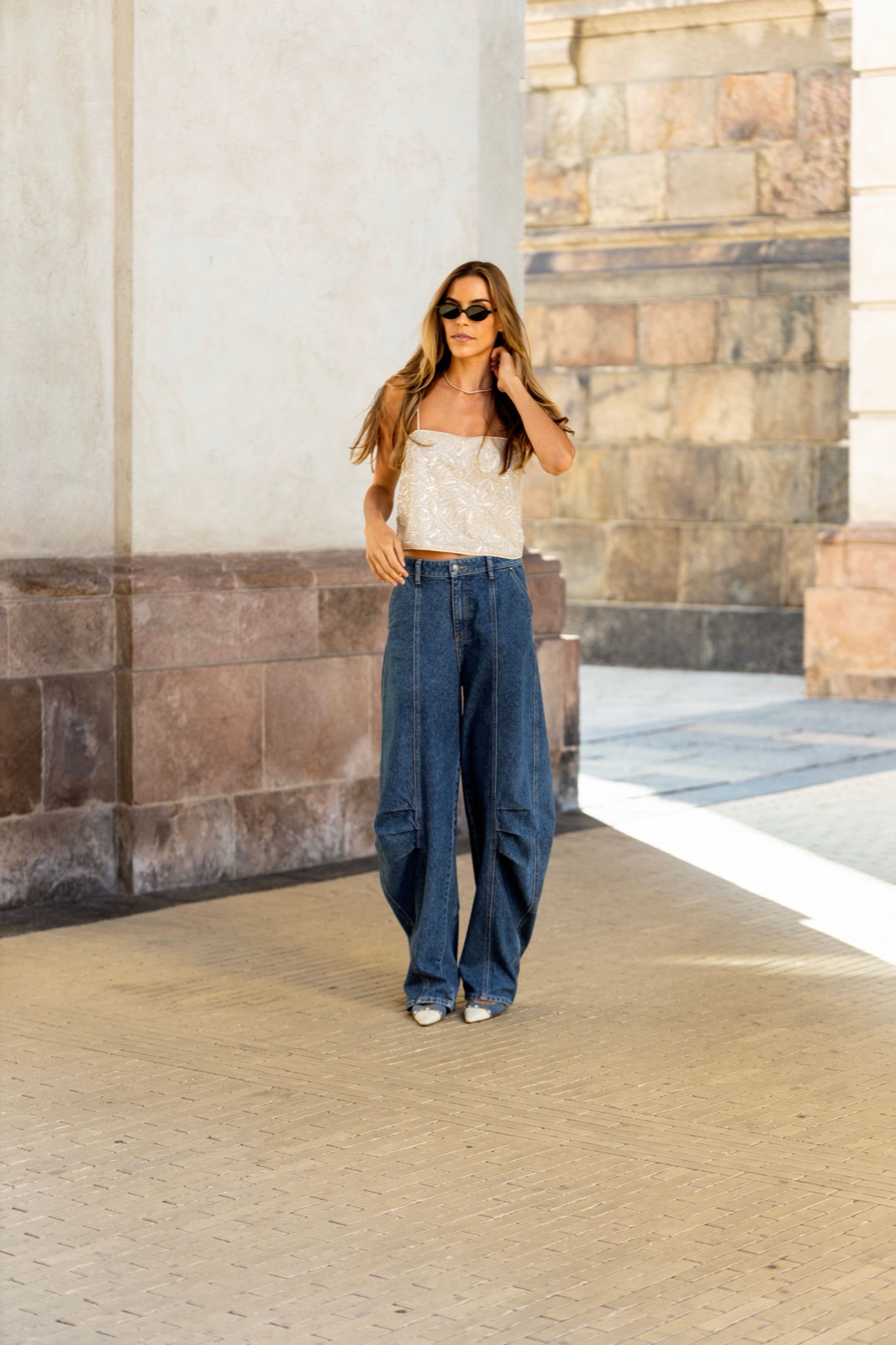
Dark jeans can become trapped in a narrow role: the safe pair for days when there is no time to think. That familiarity is useful, but it can also hide how much the same jeans can change when given a different shirt, shoe or outer layer. Before replacing them with another wash or silhouette, try assigning them a new job. The experiment is less about making denim look expensive and more about discovering which parts of your wardrobe it can connect.
Harper's Bazaar has highlighted indigo jeans in its autumn styling coverage. The colour offers a useful starting point because it can sit quietly beside many different textures and levels of formality. Our focus is the pair already in your wardrobe. A new wash is not required, and the most interesting change may come from the clothes around the denim rather than from the denim itself.
Put the jeans on and check how they feel now. Notice the waistband, room through the hip and thigh, and the length with your usual shoes. A useful styling exercise begins with a comfortable garment. If the pair needs a repair or no longer fits your preferences, address that first. There is little value in building several attractive outfits around jeans you avoid wearing after an hour.
Look at the wash and construction too. A uniform dark surface creates a different impression from visible fading or contrast stitching. A straight leg behaves differently from a wide one. These details are not a hierarchy of better and worse denim; they are information about the particular pair. The goal is to work with its actual character rather than imagine that every dark jean will produce the same result.
Start with a shirt you already wear for work and add the jeans. Look at the meeting point between the two garments. A full tuck can create a clear waist, while a shorter shirt may sit comfortably without one. If the shirt is long and loose, try a partial tuck or a more defined outer layer. Choose the arrangement that remains comfortable when you sit, not only the one that looks tidy while standing.
Footwear and workplace expectations matter. A simple loafer or enclosed flat may support the look in some settings, while other workplaces require something more formal than denim. Use the outfit where it fits the context rather than trying to prove that jeans belong everywhere. A practical style idea respects the situation. It does not ask you to ignore a dress requirement because the combination looks convincing in a fashion photograph.

Dark blue denim can look interesting beside other blues, but the shades do not need to match perfectly. A pale shirt creates contrast; a navy knit concentrates the palette; a blue-grey jacket introduces a softer transition. Put the garments together in daylight and assess the actual relationship. Colour names can make two pieces sound compatible while concealing differences that become obvious once they are worn together.
If several blues feel flat, introduce another texture before another colour. A ribbed knit, a smooth shirt or a textured jacket can separate the surfaces while keeping the palette quiet. Alternatively, add a small accent through a scarf or bag. The denim can remain the steady element while one other piece changes the mood. There is no need to make every part of the outfit equally noticeable.
A top usually reserved for dinner can give dark jeans a different context. It might have an interesting neckline, a fluid fabric or a more expressive sleeve. Keep the rest of the outfit relatively straightforward at first so that you can judge the relationship. If the top is full, consider whether the jean shape gives it enough balance. If the top is narrow, a wider leg may create a silhouette you enjoy.
Choose a shoe for the actual evening, including the journey there and back. A heel is an option, not a requirement for making denim feel considered. A simple flat, a polished boot or another comfortable shoe can work depending on the outfit and setting. Add the layer you will need later before deciding the look is complete. The coat or jacket is part of the outfit, not an inconvenient interruption to it.
Even the familiar jeans-and-knit outfit can change through proportion. Try a shorter sweater with a higher rise, or a longer one with a clearer neckline and a more defined shoe. A shirt cuff showing beneath the knit can introduce a small point of contrast. A different belt may alter the waist, though the outfit should not need a belt simply to prove that it has been styled.
Notice what happens at the ankle. The hem, sock and shoe create a sequence of lines that can make the same jeans feel relaxed or more precise. A turn-up may be useful if the fabric allows it and you like the result, but it is not a compulsory denim gesture. If the jeans are consistently too long for your preferred shoes, a considered alteration may be more useful than repeatedly arranging the hem.
Follow the care instructions for the specific jeans and any guidance from the manufacturer. Dark denim can require attention to colour transfer, especially when new, so check the product information before pairing it with light upholstery or delicate pale accessories. Avoid assuming that every wash or fabric treatment behaves identically. The practical care decision should come from the garment you own, not a universal rule repeated for all denim.
Address loose stitching, worn hems or failing fastenings before they become larger problems. If a repair is needed, discuss whether you want it to blend in or become visible. Either can be a valid choice. The useful outcome is a pair you can continue wearing comfortably. A familiar garment with a considered repair may connect to your wardrobe more naturally than a replacement chosen under the pressure of suddenly having nothing suitable.
After trying several outfits, write down what prevented any of them from working. Perhaps the jeans are fine but the only suitable jacket is too warm, or the shoes you imagined need repair. This is more useful than concluding that you need different jeans because one combination felt unfinished. A wardrobe works through relationships, and the missing element may sit somewhere else entirely.
If you do decide to add something, choose it to support several outfits rather than one photograph. A shirt, shoe or layer that works with the jeans and other existing clothes will usually be more useful than a highly specific finishing piece. The exercise should increase the number of days you can dress easily. It should not convert a reliable pair of jeans into the beginning of an unnecessary shopping project.
Once you find a new combination, wear it more than once before moving on. Repetition reveals whether the outfit is genuinely useful or simply novel. You may discover that the shirt needs a different tuck, the bag is too heavy or the shoe changes the mood more than expected. Those adjustments are part of making the look your own, not evidence that the original idea failed.
Dark jeans do not need a dramatic reinvention to earn renewed attention. They may simply need a different colleague in the wardrobe: a shirt from your working week, a top from your evening clothes or a jacket you had mentally assigned elsewhere. Give the pair a new task and see how it performs. Familiarity becomes valuable when it provides a reliable foundation for a little curiosity.
OUR WRITERSToni MelaRead more from Toni Mela on Bloom Circle.
All stories by Toni Mela ↗